December 2025 Newsletter
Happy Holidays from Gulf Coast
A Note from Elizabeth Welch, J.D. on Your End of 2025 Need-to-Knows
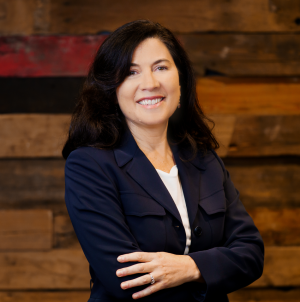
As we reflect on the year drawing to a close, we are energized by the collaborative work that our Philanthropy Team and our Professional Advisor community have accomplished together. Over the past year, Gulf Coast has transformed the way we partner with advisors and donors to achieve meaningful results that will benefit our community for generations to come.
This progress begins with you—and with the confidence you place in Gulf Coast to partner with you to provide your clients with creative solutions to their issues, followed by exceptional, A+ service. It has been deeply rewarding for our team to receive your emails, phone calls, and text messages letting us know that you have referred yet another client to Gulf Coast. Your trust and partnership make all the difference, and we are truly grateful.
As always, we are happy to share what’s trending in the world of charitable giving. We keep a close eye on developments impacting charitable giving and in turn relay that information to you, which saves you time as you keep up with everything else related to your clients’ tax, financial, and estate planning matters.
Here's What's Trending
It’s down to the wire! By now you’re of course aware that 2025 is a crucial year to act on charitable planning before changes in the tax laws take effect in 2026, especially for clients who itemize deductions. Take advantage of the remaining window of opportunity to advise your clients, and lean on Gulf Coast to help set up donor advised funds, QCD designated funds, or other charitable giving structures.
As families gather together around the holidays, keep in mind that it’s a good time to suggest that your clients consider multi-generational family philanthropy strategies. Relationships are key to advisors’ retaining children and grandchildren as clients when parents pass away. Gulf Coast can help you incorporate charitable giving as a thread to connect generations and preserve long-term relationships.
Sadly, an uptick in incapacity and undue influence disputes is making it even more important to document clients’ charitable intentions while you’re also documenting estate and financial plans. We are happy to share concrete suggestions for ways to record intent across wills, trusts, beneficiary designations, and incapacity instructions to reduce ambiguity and conflict related to clients’ philanthropic priorities.
As always, we are grateful for the opportunity to work together! Enjoy the holidays, and thank you for all you do for our community.

CLOSING OUT 2025: Last Call for Current Tax Rules
As you counsel clients through year-end tax planning, Gulf Coast encourages you to remind them that 2025 presents a critical window of opportunity for charitable giving before major provisions of the One Big Beautiful Bill Act (OBBBA) take effect on January 1, 2026. The new law could significantly reshape the tax treatment of charitable contributions in ways that may reduce the tax value of gifts made after this year.
Here are four things you need to know:
-Beginning with the 2026 tax year, clients who itemize will face a new 0.5% of adjusted gross income floor for charitable deductions, meaning that only the portion of their giving that exceeds that threshold will be deductible. In addition, high-income clients will see the value of their deductions capped at 35 cents on the dollar, even if they are in a higher marginal tax bracket.
-For corporations, the OBBBA introduces a new 1% taxable income floor limitation on charitable deductions, also effective in 2026. Corporations will only deduct charitable contributions that exceed 1% of their taxable income. The existing cap at 10% remains. This means in 2026 and beyond deductions are limited to contributions between 1% and 10% of taxable income.
-Your clients may be aware of another new law effective in 2026 allowing taxpayers who take the standard deduction to claim a modest “above-the-line” charitable deduction—up to $1,000 for single filers and $2,000 for married couples filing jointly. While helpful, this limited deduction provides far less benefit than itemizing under current rules.
-Because of upcoming changes, 2025 is shaping up to be an especially important year for charitable planning. Your clients who itemize their deductions may benefit from “accelerating” or “bunching” contributions into their donor advised funds at Gulf Coast this year to take full advantage of the current, more favorable rules.
Plus two bonus "must-knows":
-The OBBBA did not change the rules for Qualified Charitable Distributions, which continue to allow individuals aged 70½ or older to give up to $108,000 in 2025 directly from an IRA to an eligible charity, bypassing taxable income and counting toward required minimum distributions (if applicable). Certain types of funds at Gulf Coast, such as designated funds, unrestricted funds, field of interest funds, and scholarship funds may receive QCDs. (But not donor advised funds)
-Because a QCD reduces adjusted gross income rather than functioning as an itemized deduction, it will remain unaffected by the OBBBA’s new 0.5% AGI floor and the 35% cap that will apply to itemized charitable deductions starting in 2026. As a result, QCDs may become even more valuable next year, offering a tax-efficient charitable giving option at a time when traditional deductions will be more limited for some of your clients.
Our team at Gulf Coast is here to support you as you help clients navigate these shifting rules. We are happy to serve as a resource for evaluating giving strategies, structuring multi-year plans, and helping clients use tools such as donor advised funds, designated funds, or field of interest funds to make the most of their 2025 contributions. Please reach out as soon as you can. We are honored to collaborate with you in serving your charitably minded clients to achieve year-end giving goals.

WHAT'S YOUR PLAN?: Why Charitable Intentions Matter
The team at Gulf Coast is honored to work with attorneys, CPAs, and financial advisors to help clients turn generosity into lasting impact. Of course, as you work with your charitable clients, you routinely determine the best way to incorporate philanthropic intentions into wills, trusts, and beneficiary designations. But how frequently do you document clients’ charitable intentions explicitly as part of incapacity planning?
Sadly, incapacity is no longer a rare edge case. Longer lifespans, higher rates of dementia, and more complex family structures are increasing the time period during which your clients’ decisions may be made by agents, trustees, or caregivers rather than clients themselves. Indeed, courts and advisors are seeing more estate and trust disputes rooted in lack of capacity and undue influence, especially when late-stage changes to an estate plan take heirs by surprise. Notably, a recent industry overview describes a surge in challenges to last-minute trust amendments, typically framed around diminished capacity or pressure from a third party.
Against this backdrop of a looming incapacity crisis, because charitable goals are values-driven and not necessity-driven, many families default to immediate needs and may ignore a loved one’s charitable intentions if they are not clearly documented. This gap is exacerbated by the reality that charitable intent is more easily reinterpreted than most planning objectives. If a file says only “she cared about education,” for example, heirs can disagree on what that means or whether it still applies. What’s more, a significant charitable gift made late in life without documented context may look suspicious to disappointed beneficiaries, inviting capacity or undue influence claims.
Gulf Coast Can Help
As you are putting together incapacity plans for clients, we are happy to provide suggestions for how to clearly document clients’ charitable intentions, including:
-Specific bequest language in wills or trusts, including gifts to clients’ donor advised or other types of funds at Gulf Coast.
-Incapacity-ready giving instructions, including continuing annual gifts if capacity declines and the conditions under which an agent under a durable power of attorney can pause them.
-Ideas for aligning intentions across all instruments, including trusts, wills, retirement and insurance beneficiary designations, and business succession plans.
-A contemporaneous statement of charitable intent to be maintained with the plan files, showing consistency over time and rationale for giving.
The point here is that clarity protects your clients’ values and reduces the ambiguity that heirs often seize on in disputes. The Gulf Coast team is happy to help your clients’ generosity survive cognitive decline, family conflict, and the rising wave of capacity-based challenges. We look forward to working together.
Your Resource.
As you serve your philanthropic clients, we strive to be your resource and sounding board. Understanding the charitable side of the equation allows us to serve as a secondary source for you as you manage the primary relationship with your clients.
Connect with us anytime! It’s our pleasure to work with you in partnership as you help your clients achieve their charitable giving goals for this year and many years beyond tomorrow.
MORE Resources
September 2025 Newsletter
Your September Content. Gift planning for 2025, FAQs about IRAs & QCDs, and corporate charitable strategies
August 2025 Newsletter
Your August Content. Defining legacy, QCDs and Endowed Funds, clients who prefer anonymity, and gifts of artwork.